
When the Screen Is Critical to the Event
An LED wall often carries the content that attendees came to see. If the display is difficult to view, installed late, or poorly coordinated with the production system, the problem can affect presentations, rehearsals, schedules, and the audience experience.
That risk falls heavily on event planners, producers, technical directors, and marketing teams. They must coordinate the venue, content, production vendors, presenters, and technical schedule while protecting the reputation of the organization or client behind the event.
Choosing a provider therefore involves more than confirming that LED panels are available. The provider must understand the environment, define its responsibilities, and prepare the display to work within the larger event plan.
What an LED Video Wall Rental Includes
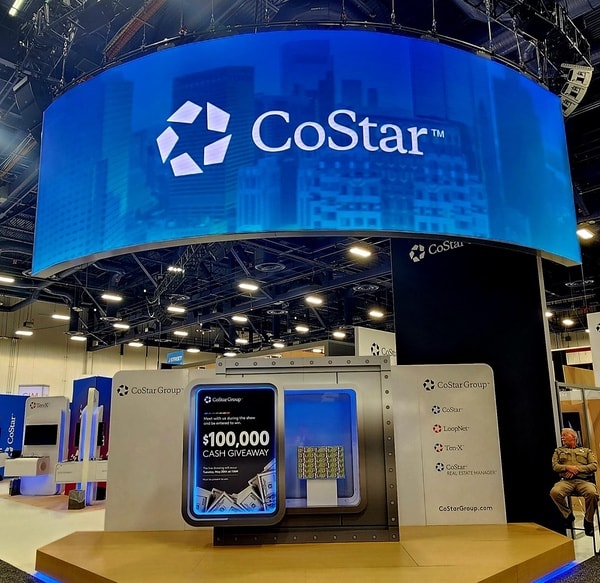
An LED video wall rental provides a modular display system configured for a specific event and period of use. High Res combines the equipment with the technical planning and support needed to fit the display into the venue and production workflow.
Services may include:
- Indoor LED video wall rental
- Outdoor LED video wall rental
- LED wall design and engineering
- Installation
- System testing
- On-site technical support
- Integration with live-event production systems
The exact scope depends on the event. Display dimensions, installation requirements, staffing, content inputs, and production responsibilities are defined during planning instead of being assumed from a standard equipment package.
An LED wall rental does not automatically include every part of event production. Audio, lighting, staging, rigging, content creation, internet service, playback, and other services must be identified separately unless they are included in the approved scope.
Where LED Video Walls Create The Most Value
LED video walls are well suited to events where the display must remain visible, serve as a central presentation surface, or contribute directly to the visual environment.
- Corporate events: Present executive messaging, branded graphics, data, and supporting visuals on a display planned around the room and audience.
- Conferences and general sessions: Give attendees a clear view of speaker content, presentations, videos, and event information across a larger meeting space.
- Trade shows: Create a prominent digital display that helps a booth compete for attention in a crowded exhibit hall.
- Brand activations: Present campaign visuals and motion content at a scale that supports the creative concept.
- Experiential marketing events: Connect digital content with a physical environment designed around audience participation and brand communication.
- Live productions: Coordinate the display with cameras, playback, staging, lighting, and the event’s wider technical system.
LED is not automatically the right format for every event. The venue, available space, audience, content, camera use, and production requirements should be reviewed before the display approach is selected.
How the Display Is Planned Around Your Event
The correct LED wall configuration starts with the event requirements, not a predetermined panel package. Reviewing the environment first helps identify physical and technical constraints before they interfere with installation or rehearsal.
Planning typically considers:
- Event type and schedule
- Indoor or outdoor conditions
- Venue, stage, or booth dimensions
- Audience size and viewing distance
- Desired screen dimensions or configuration
- Content and input requirements
- Venue access and installation restrictions
- Load-in, rehearsal, and show schedules
- Existing production partners
- On-site technical support needs
Each detail affects a different part of the recommendation. Audience size and viewing distance influence display dimensions. Stage and booth measurements determine where the wall can fit. Content sources and production systems affect how the display must connect and operate.
High Res uses this information to develop an event-specific technical recommendation. Exact equipment, dimensions, installation methods, and support requirements are confirmed after the relevant venue and production details have been reviewed.
Why Choose High Res for LED Video Wall Rental
High Res LED Rentals focuses specifically on LED video wall systems. The company is not positioned as a general equipment rental vendor offering a screen as one item among many unrelated services.
That specialization gives planners and producers a team focused on the parts of the project that directly affect the display:
- System design
- Venue compatibility
- Installation planning
- Content and signal requirements
- Production coordination
- On-site technical support
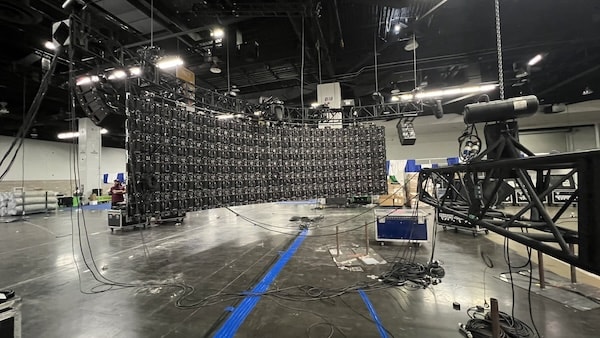
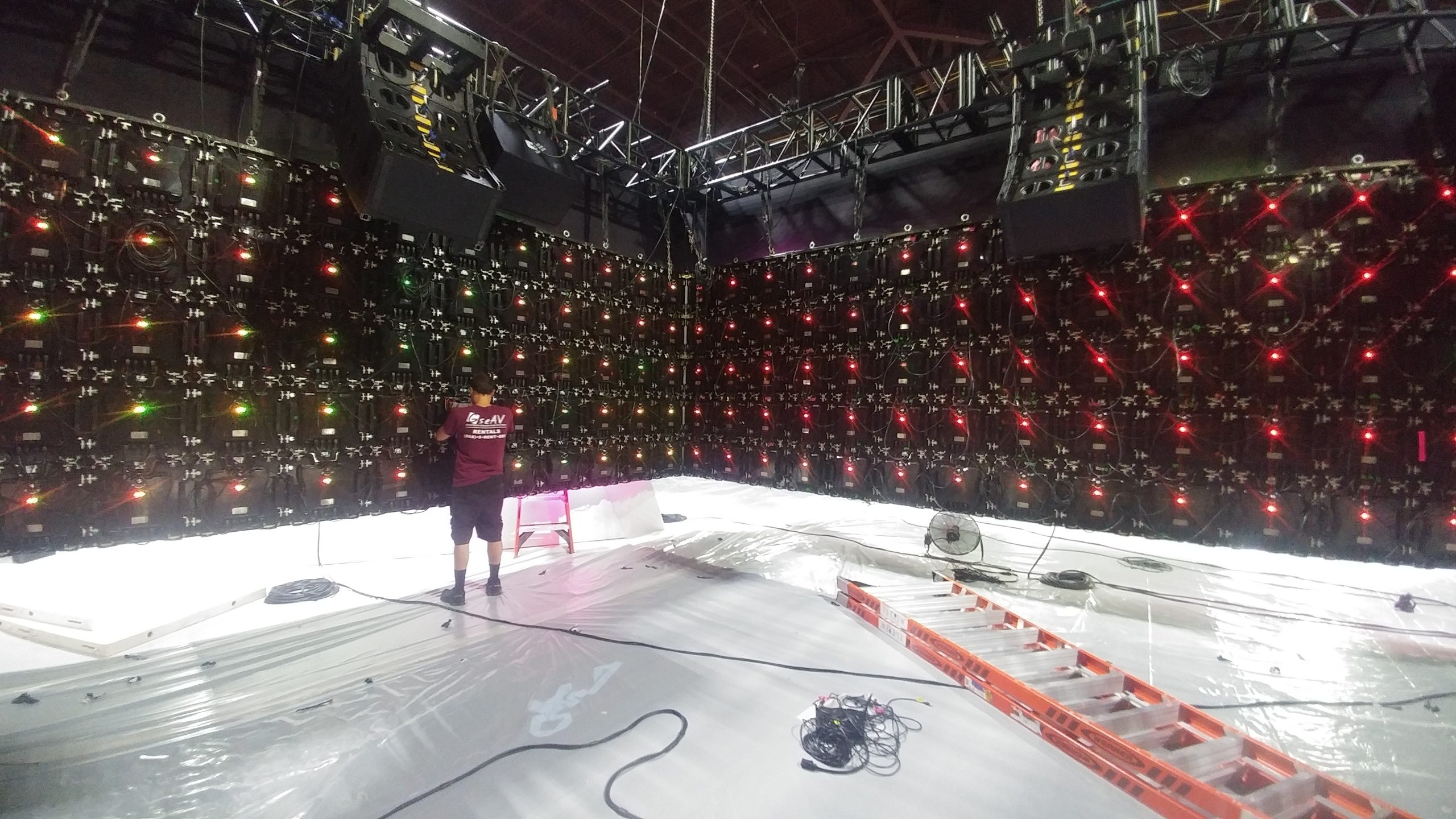
High Res is backed by the event-production experience of GSE Audiovisual Inc. This production foundation is relevant when the LED wall must work alongside venue teams, producers, camera crews, content operators, staging providers, lighting teams, and other technical vendors.
The display is planned as part of the event system rather than as isolated rental equipment. That approach helps clarify dependencies and responsibilities before load-in, when changes become harder to manage.
High Res also supports indoor and outdoor projects, custom configurations, professional installation, testing, and integration with existing production workflows. The result is a defined LED scope designed around the event instead of a generic screen package.
How the LED Video Wall Rental Process Works
The process moves from initial event information to technical planning, installation, and support. Timing is based on the venue schedule and complexity of the project rather than a fixed timeline applied to every event.
1. Share Your Event Details
Provide the event date, venue, event type, indoor or outdoor setting, expected audience, and initial visual goals. You do not need to determine the final screen size before starting the conversation.
Deliverable: An initial project overview and a list of information needed for technical review.
Timing: Initial consultation stage.
2. Review the Venue and Production Requirements
High Res reviews the stage or booth layout, access conditions, production schedule, content sources, existing vendors, and technical dependencies. This review identifies factors that could affect display design, installation, or production integration.
Deliverable: Confirmed planning requirements and known project constraints.
Timing: Based on the availability of venue information and the complexity of the event.
3. Engineer the Recommended LED Solution
The team develops a display recommendation based on the audience, environment, venue, content, visual goals, and production workflow. The recommendation may address screen dimensions, configuration, installation method, technical connections, and support needs.
Deliverable: A proposed LED system and technical approach.
Timing: After the required event and venue information has been reviewed.
4. Confirm Scope and Responsibilities
The project scope identifies what High Res will provide and what remains with the client, venue, or other production vendors.
Responsibilities may include equipment, installation, content inputs, playback, technical integration, testing, and on-site support.
Deliverable: A defined project scope or proposal.
Timing: Confirmed before the scheduled load-in.
5. Install and Test the Display
The technical team installs the LED wall according to the approved plan, connects the required systems, and tests the display within the available production schedule. Installation is coordinated with the venue and relevant production teams to prevent avoidable conflicts during load-in and rehearsal.
Deliverable: An installed and tested LED video wall.
Timing: Based on approved venue access and the event production schedule.
6. Support the Event Through Completion
When on-site technical support is included, the team supports the agreed LED scope during the event. Responsibilities may include system monitoring, coordination with production personnel, and response to display-related issues. The staffing plan and support period are defined before the event.
Deliverable: Technical support for the contracted LED scope.
Timing: Based on the approved rehearsal, show, and event schedule.
Event Results and Client Proof
A credible LED proposal should give buyers more than a screen size and total price. It should show how the display was selected, what venue and production requirements were considered, and who is responsible for each part of the system.
High Res supports that evaluation through an event-specific recommendation and defined scope. Before approving the project, the buyer can review:
- The proposed display configuration
- The installation approach
- Venue and access dependencies
- Content and production requirements
- Coordination responsibilities
- Testing expectations
- On-site support requirements
These details give planners and producers concrete information they can compare across proposals. They also help expose missing responsibilities before the event schedule is underway.
High Res is backed by the production experience of GSE Audiovisual Inc. and provides LED design, engineering, installation, technical support, and production integration for live-event environments.
LED Video Wall Rental Questions
Who Supplies the Content Shown on the LED Video Wall?
The client or its designated content team usually supplies the slides, videos, graphics, and other material unless content services are included in the project scope.
Content ownership, formatting, playback, and testing responsibilities should be confirmed early. This gives the production team enough time to review how the material will enter and appear on the LED system.
Can an LED Wall Display Slides, Videos, and Live Camera Feeds?
An LED wall can present slides, videos, branded graphics, and live camera content when the production system supports those sources.
Compatibility depends on the content format, playback equipment, switching system, signal path, and production plan. These requirements must be reviewed before the final system is approved.
Can an LED Video Wall Be Built in a Custom Size or Shape?
LED walls use modular panels that can support different dimensions and configurations.
The final design depends on the selected system, venue dimensions, installation method, structural conditions, content layout, and audience needs. A custom concept should be reviewed before the stage or booth design is finalized.
What Venue Information Is Needed Before Planning Begins?
The required information depends on the project, but the initial review may include:
- Stage or booth dimensions
- Venue access and loading information
- Available setup time
- Ceiling or structural conditions
- Venue production rules
- Installation or rigging restrictions
- Power information
- Production contacts
High Res identifies any additional requirements after reviewing the event and venue.
Can High Res Work With an Existing Production Company or Venue Team?
Yes. High Res can coordinate the LED display scope with existing producers, technical directors, agencies, venue teams, content operators, and other event vendors.
Roles should be documented before load-in so each team understands its responsibility for the display, content, signal path, installation area, technical schedule, and show operation.
How Does an LED Video Wall Perform on Camera?
Camera performance depends on the LED system, display configuration, camera settings, content, and production environment.
Tell High Res when the wall will appear in photography, recordings, livestreams, or live camera feeds. Camera use can then be considered during technical planning rather than addressed after the display has been selected.
Plan the LED Display for Your Event
You do not need to determine the screen dimensions, panel configuration, or installation method before contacting High Res. Start with the event date, venue, audience, content requirements, and the visual result your team needs.
High Res will review those details, identify the remaining technical questions, and develop a display recommendation around the event rather than forcing the project into a standard rental package.