When a Standard Display Cannot Meet the Brief
A standard LED wall package may provide a screen without solving the actual presentation challenge. The dimensions may not suit the room, the content may not fit the display format, or the installation plan may conflict with the event schedule and wider production.
For corporate planners, that creates another technical risk to manage. Production agencies may face integration problems that affect their client relationship. Trade show exhibitors can lose visibility when a display does not suit the booth or surrounding sightlines. Marketing teams may end up with a presentation that feels disconnected from the importance of the brand or event.
Custom planning starts with what the display must accomplish. The system can then be designed around the audience, venue, content, and production conditions instead of forcing those requirements into a fixed package.
What Custom LED Display Solutions Include
A custom LED display solution combines the display equipment with the planning and technical work required to use it successfully. High Res coordinates the LED system from the initial requirements through installation and event support.
The service can include:
- Requirements consultation
- LED wall design and engineering
- Indoor or outdoor system configuration
- Installation planning and execution
- Live production integration
- System testing
- On-site technical support
This approach gives your team one defined plan for the LED display. It reduces the coordination gaps that can occur when design, equipment, installation, and technical responsibilities are handled separately.
The exact scope depends on the event. Content creation, venue approvals, and services outside the LED display system must be confirmed separately so responsibilities are clear before production begins.
Design Consultation Process
A custom project moves from the event brief to a confirmed display and installation plan. The timing of each stage depends on the venue, display format, content requirements, and production complexity.
Define the Visual Objective
High Res begins by reviewing the event type, audience, content, brand requirements, and intended use of the display. A general session may need a clear presentation surface for a large seated audience, while a trade show display must account for booth dimensions and views from surrounding aisles.
This discussion establishes the display priorities and gives the technical team a clear brief for the next stage.
Review the Venue and Production Requirements
The venue and production environment determine what can be installed and how the system must operate. High Res reviews the proposed location, available space, viewing conditions, installation access, event schedule, venue restrictions, and relevant production connections.
The result is a defined set of requirements that can be used to plan the display without overlooking access, timing, or coordination issues.
Develop the Display Concept
High Res uses the confirmed requirements to recommend a display format and modular LED configuration. The concept considers the content layout, physical space, audience view, and role of the screen within the event.
Your team receives a proposed direction that can be reviewed before equipment and production details are finalized.
Coordinate Integration and Installation
The approved display must fit into the wider event schedule. High Res coordinates the LED requirements with venue access, content sources, production teams, setup timing, and agreed responsibilities.
This stage creates a practical installation and integration plan, giving each party a clear understanding of what must happen before the display is ready for use.
Finalize Testing and Technical Support
Before the event, the team confirms how the display will be tested, who will operate the system, and what on-site technical support is included. These decisions reduce uncertainty during setup and prevent basic responsibilities from being left unresolved until the event begins.
Testing and support are scheduled around the confirmed installation and production timeline.
Branding Integration Ideas
The display format can support the brand when it is planned around the content and event environment. High Res focuses on the LED canvas and its technical integration. Creative development and content production must be confirmed separately.
Branded stage backdrops can create a consistent visual setting behind speakers, panels, or keynote presentations. The display can carry event graphics and brand elements while keeping the stage visually connected to the organization.
Wide presentation canvases provide room for speaker content, supporting visuals, event branding, and additional information. Planning the canvas before finalizing the content prevents important material from being stretched, cropped, or placed where the audience cannot read it.
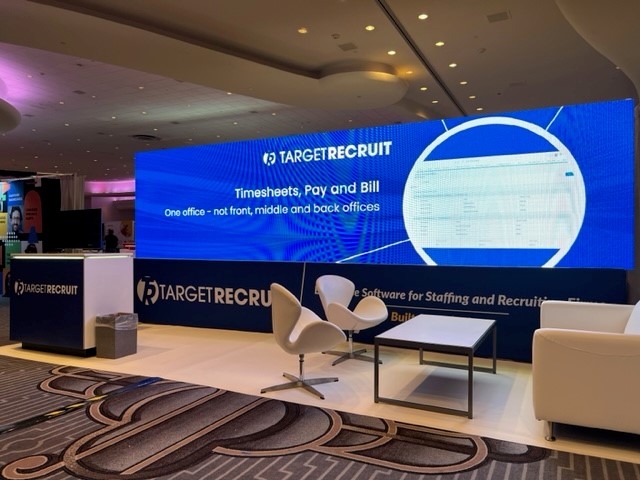
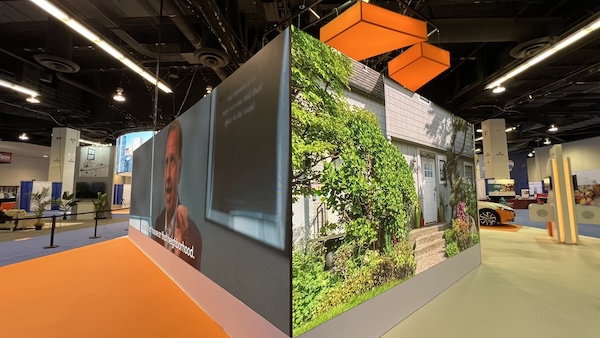
Trade show display features can be configured around the booth footprint and surrounding sightlines. This gives exhibitors a more visible presentation surface than static graphics while keeping the message clear to people approaching from different directions.
Brand activation displays can support campaign visuals, scheduled media, sponsor content, or live event material. The display arrangement should reflect how attendees move through the space and where they are most likely to see the content.
General session layouts can divide the visual canvas between presentation material, speaker support, event graphics, and approved sponsor information. A defined layout gives the production team a consistent structure throughout the program.
Seamless 4K Display Options
The phrase “seamless 4K display” can describe more than one requirement. Some teams need to present 4K source material. Others want a large continuous canvas without the thick borders found between conventional flat-panel screens.
A modular LED wall can provide a continuous visual surface, but that does not mean every configuration has a native 4K pixel resolution. The final result depends on the full content and signal workflow, including:
- Source-content resolution
- Display dimensions
- Aspect ratio
- LED configuration
- Content scaling
- Signal processing
- Audience viewing conditions
High Res reviews these requirements before recommending a system. This allows the display concept to account for the content that will be shown instead of treating “4K” as a general quality label.
Native resolution, exact pixel dimensions, processing capability, and camera suitability must be confirmed for the proposed configuration. The right system is the one that presents the content clearly at the required scale and works within the event environment.
Why Choose High Res for Custom LED Display Solutions
High Res LED Rentals specializes in LED video wall systems. The company is not positioned as a general AV supplier that adds an LED screen to a broad equipment list.
That focus covers the parts of an LED project that directly affect event execution:
- LED wall design and engineering
- Indoor and outdoor LED video wall rental
- Installation
- On-site technical support
- Live production integration
High Res is backed by the event-production experience of GSE Audiovisual Inc. This matters when the LED display must connect with content systems, venue schedules, production crews, and other technical elements. Your team works with a provider that understands the display as part of the production, not as isolated rental equipment.
Corporate planners and marketing leaders gain a clearer path from the event brief to the finished display. Production agencies and technical directors gain a partner that can coordinate the LED requirements with an established production workflow.
The result is defined responsibility for the LED system, from planning through on-site execution. That reduces the risk of discovering unresolved display, installation, or integration issues during setup.
Results Clients Can Verify
A custom LED display proposal should make the recommended system and service scope clear before the project is approved. Your team should be able to verify how the display addresses the venue, audience, content, and production requirements.
Review the following details before making a decision:
- Proposed display format and intended use
- Venue and installation requirements
- Content and production connections
- Setup and testing responsibilities
- On-site technical support scope
- Responsibilities assigned to other vendors or teams
These details provide a stronger basis for comparing providers than equipment availability alone. They also show whether the display has been planned around the event or selected before the project requirements were understood.
High Res’s verified service scope includes LED wall design and engineering, indoor and outdoor rentals, installation, on-site technical support, and integration with live event production. Its production-backed positioning through GSE Audiovisual Inc. provides additional context for teams that need the LED system to work within a larger event workflow.
Custom LED Display Questions
How is a custom LED display different from a standard rental package?
What information is needed to begin planning?
Does the content need to be finished before planning starts?
Can content be changed during the event?
Who operates the LED display during the event?
Can the display be planned for both the live audience and cameras?
Plan Your Custom LED Display
Share the event type, venue, date, audience, content requirements, and intended visual result. High Res will review the project and determine the appropriate next step for the LED display.
Submit your project details through the consultation form or request a direct discussion with an LED specialist.