
Create Digital Visual Impact Without Closing Off the Environment
Some event designs need a digital display but cannot afford to hide what sits behind it. A solid LED wall may block products, scenic features, booth activity, performers, or architectural elements that are central to the experience.
ClearLED creates a digital content layer while allowing parts of the surrounding environment to remain visible. This gives event producers, exhibit designers, and marketing teams more freedom to combine motion graphics with physical spaces.
Transparent LED is not automatically the right format for every event. Its effectiveness depends on placement, viewing angles, content design, lighting conditions, and what the audience should see behind the display.
High Res evaluates those factors before recommending a configuration. That prevents the technology from being selected for appearance alone when another display format would serve the event more effectively.
Where Transparent LED Displays Fit Best
Transparent LED is best suited to environments where digital content and the physical setting must remain visible at the same time.
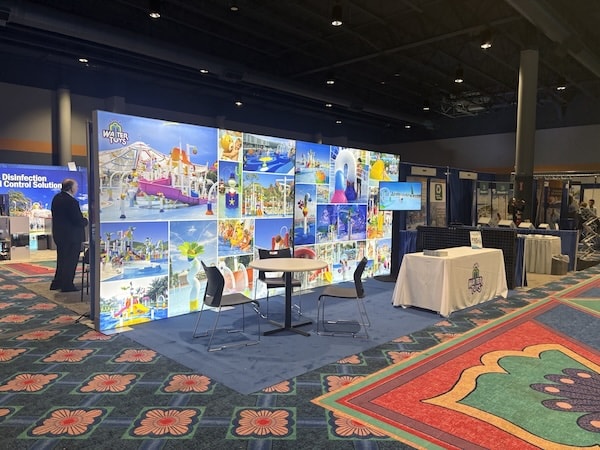
At a trade show, ClearLED can display branded motion content without completely closing off the booth interior. Visitors can still see products, demonstrations, and staff behind the display, which helps the screen support the exhibit rather than divide it.
For corporate events and conferences, the format can fit scenic designs that combine presentation content with visible stage elements. Audience positions, camera use, lighting, and content composition still need to be evaluated before the display is specified.
Brand activations and experiential installations may use ClearLED to place digital visuals over products, structures, or physical experiences. The content and background must be designed together because each affects how clearly the other can be seen.
Transparent LED may also suit product presentations where the item behind the screen is part of the visual concept. High Res reviews the intended view, installation area, and production conditions before confirming whether ClearLED fits the project.
ClearLED Transparent LED Versus Conventional Display Options
ClearLED and conventional LED walls solve different visual problems. The decision should be based on the event design, content, viewing environment, and production requirements.
A conventional LED wall creates a solid image surface. It may be the better choice when the screen must function as a complete backdrop, separate the content from visual distractions, or present a traditional presentation layout.
ClearLED allows portions of the physical environment behind the display to remain visible. It may be better suited to booths, stages, and branded installations where scenery, products, architecture, or people must remain part of the audience’s view.
Content must also be considered. Graphics created for a solid LED wall may not communicate as clearly when the surrounding environment remains visible through parts of the display.
Neither format is universally better. High Res compares the desired visual result with placement, sightlines, content, venue access, structure, signal routing, and production schedules before recommending a system.
Why Choose High Res for ClearLED Transparent LED Display Rental
- High Res is an LED display specialist, not an equipment-only rental vendor. The company owns its ClearLED inventory and supports the system with design, installation, testing, and technical coordination.
- Owned inventory gives the project team a defined source for the display being proposed. It also allows the scope to identify the equipment, labor, support, and responsibilities before the rental is approved.
- High Res plans each display around the event environment. The team reviews the installation location, audience sightlines, content requirements, venue conditions, production schedule, and existing vendors before finalizing the system.
- This process helps identify conflicts before load-in, when changes are usually more disruptive and expensive. Venue restrictions, signal responsibilities, access limitations, and content issues can be addressed while the project can still be adjusted.
- High Res can work with event producers, technical directors, creative teams, exhibit companies, venue personnel, and existing production vendors. Clients can bring in specialized LED support without replacing the rest of their event team.
- The difference is not simply access to ClearLED panels. It is having one provider responsible for turning the proposed display into an installed, tested, and supported part of the production.
How the ClearLED Rental Process Works
The ClearLED rental process moves from project definition to installation and load-out. Each stage resolves decisions that affect the next, reducing avoidable changes as the event approaches.
1. Define the Visual and Production Requirements
High Res collects the event date, venue, display location, approximate dimensions, audience position, desired visibility, content type, production schedule, and existing vendor information.
The result is an initial project brief that defines what the display must accomplish and identifies missing details that could affect the recommendation.
Timing depends on how much venue, creative, and production information is already available.
2. Design the Display Configuration
The team evaluates display size, placement, sightlines, support requirements, power, signal routing, content workflow, and the relationship between the screen and the environment behind it.
This produces a recommended system concept and a clearer understanding of the technical scope. The buyer can review the proposed approach before equipment and labor are committed.
Design timing depends on the installation complexity and the availability of accurate venue information.
3. Coordinate the Production Plan
High Res confirms the LED requirements with the venue, producer, technical director, content team, exhibit partner, scenic team, and other relevant vendors.
This coordination covers access, load-in timing, installation position, power responsibilities, signal paths, rehearsals, and show schedules. Clear responsibilities reduce delays caused by vendors working from different assumptions.
The schedule depends on venue requirements and the number of teams involved.
4. Install, Connect, and Test the System
The ClearLED equipment is delivered, staged, assembled or mounted, connected, aligned, and tested according to the approved scope.
The team checks the signal path and supplied content on the installed display. Testing before show time provides an opportunity to correct display, signal, alignment, or media issues before the audience arrives.
Installation time depends on venue access, system configuration, structural requirements, and the production schedule.
5. Support the Event and Complete Load-Out
When technical support is included, High Res monitors the display and coordinates with the production team during the agreed event periods.
The proposal defines whether support covers setup, rehearsal, show operation, selected program hours, or the entire event. Continuous technician coverage should not be assumed unless it appears in the approved scope.
After the event, the system is shut down, disassembled, and removed within the venue’s load-out schedule.
Project Limitations and Expectations to Confirm Early
A ClearLED configuration must fit more than the requested dimensions. The venue, installation position, viewing angles, support structure, power, signal path, content format, access schedule, and surrounding production elements all affect whether the concept can be executed responsibly.
High Res can control the quality of its planning, coordination, installation, testing, and technical support. It cannot remove venue restrictions, create additional load-in time, correct late content without notice, or assume responsibilities assigned to another vendor.
Transparent content also requires deliberate preparation. Graphics made for a solid LED wall may need changes to account for the background, open areas, contrast, and the way the physical environment appears through the display.
Technical specifications are confirmed against the ClearLED inventory proposed for the project. Pixel pitch, brightness, transparency, dimensions, mounting options, viewing guidance, and other performance details should not be assumed before the system is selected.
Outdoor requests require separate review. High Res generally limits outdoor LED projects to short-duration events because much of its inventory is not IP65-rated. The proposed ClearLED equipment, exposure, weather conditions, installation method, and event duration must all be approved before outdoor use is confirmed.
ClearLED Transparent LED Display Rental FAQs
Can content created for a standard LED wall be used on a transparent LED display?
Existing content may be technically compatible, but it may not create the intended result. Transparent displays interact with the background behind the image, so graphics may require different contrast, spacing, composition, or open areas. High Res can confirm playback requirements, while creative changes remain the content team’s responsibility unless added to the scope.
Who is responsible for preparing and formatting the visual content?
Content responsibilities are defined during planning. The client, agency, or content team normally supplies the approved media, while High Res confirms the technical playback requirements for the selected configuration. Content creation and redesign are not included unless listed in the proposal.
Can ClearLED integrate with an existing show-control or video system?
Integration depends on the content source, signal format, processing requirements, and existing production system. High Res reviews these details with the technical team before confirming the signal workflow and assigning responsibilities.
Will a technician remain on-site throughout the event?
On-site technical support is available, but coverage depends on the approved scope. The proposal states whether a technician is present for installation, rehearsal, show operation, selected program periods, or the full event.
What information is needed before High Res can prepare a recommendation or proposal?
High Res needs the event date, venue, intended display location, approximate dimensions, visual objective, content type, audience position, production schedule, access information, existing vendors, and requested support level. Complete information leads to a more accurate system recommendation and clearer proposal.
How early should ClearLED be coordinated with the venue and production team?
Coordination should begin once the venue, display concept, and event schedule are known. Projects involving custom structures, restricted access, multiple technical vendors, or specialized content require more planning than straightforward installations.
What happens if the venue cannot support the proposed installation?
High Res reviews whether the placement, dimensions, configuration, installation method, or schedule can be changed. When the original concept cannot be executed responsibly, the team recommends a workable alternative rather than forcing the display into unsuitable conditions.
Plan Your ClearLED Transparent LED Display Rental
Share the event date, venue, intended display location, approximate dimensions, visual objective, content type, and production schedule. High Res will use those details to evaluate fit and identify the information needed for an accurate ClearLED rental scope.
You do not need to design the complete system before contacting the team. The first discussion is used to clarify the environment, responsibilities, and next technical decisions.